
Floor Drain vs. Floor Sink: How to Choose the Right Drainage Fixture
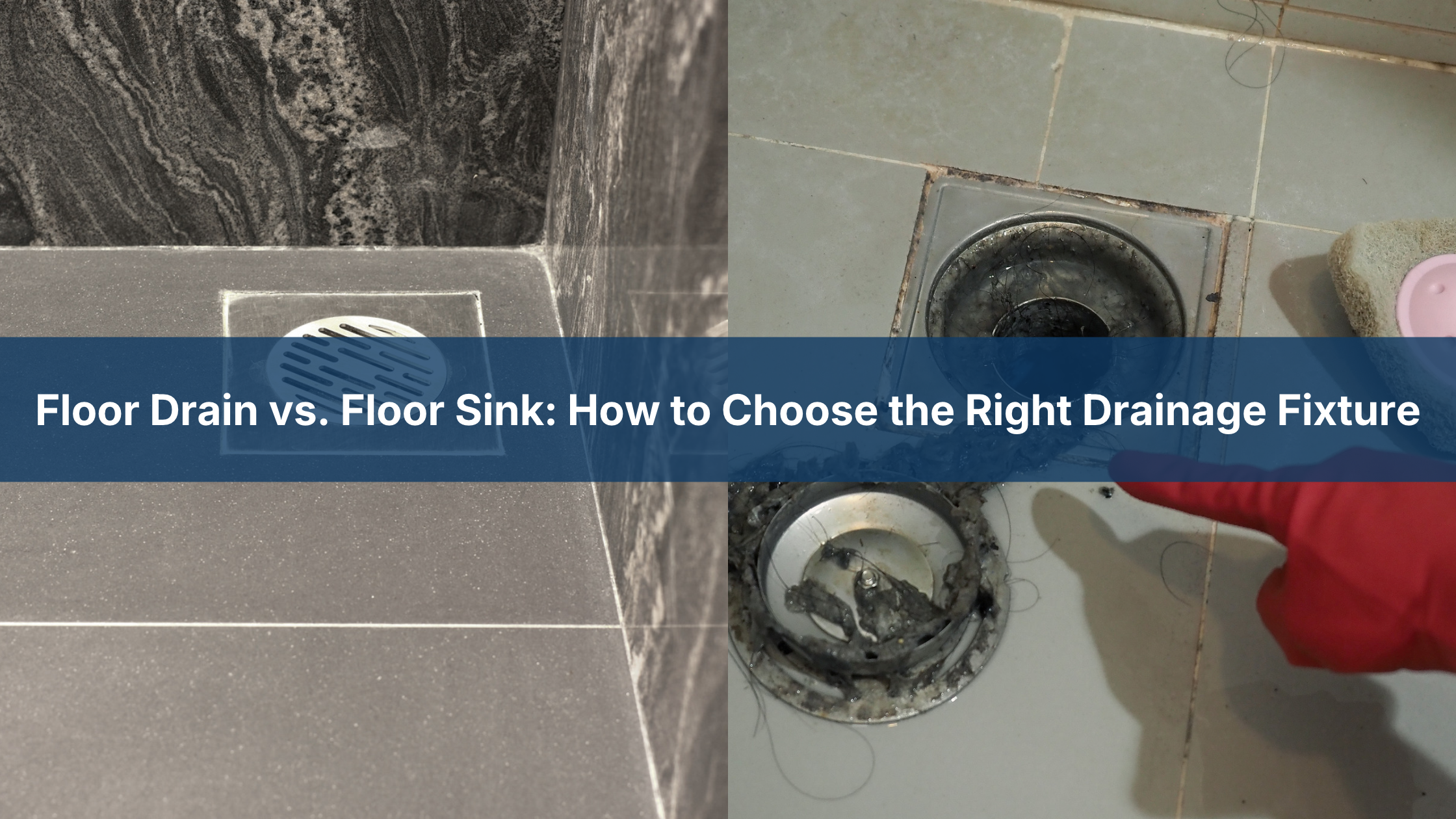
Choosing between a floor drain and a floor sink is essential for an efficient drainage system. Although both manage wastewater, they serve different purposes. Understanding their differences helps contractors, plumbers, and facility managers select the right fixture for residential, commercial, and industrial applications.
What Is the Difference Between a Floor Drain and a Floor Sink?
A floor drain removes standing water directly from floor surfaces. Installed flush with the finished floor, it is commonly used in garages, basements, utility rooms, and locker rooms.
A floor sink, on the other hand, is a deeper drainage receptor designed to collect indirect wastewater from equipment such as dishwashers, ice machines, and commercial refrigerators. It typically provides an air gap between the equipment's discharge pipe and the receptor, helping meet applicable plumbing code requirements.
Floor sinks generally feature larger, deeper sumps to accommodate wastewater, sediment, and debris.
How to Choose the Right Drainage Fixture
Selecting the right fixture depends on several important factors.
1. Identify the Wastewater Source
For water flowing directly across floors, choose a floor drain. For indirect discharge from commercial equipment, a floor sink is generally more appropriate, particularly when an air gap is required.
2. Consider Sediment and Debris
Commercial kitchens and industrial facilities often produce wastewater containing food particles or debris. Deep-sump floor sinks provide additional collection space, helping prevent sediment from immediately entering drainage pipes.
3. Check Pipe Size and Connections
Before installation, verify the existing drainage pipe configuration. Plastic Oddities offers fixtures compatible with various Schedule 40 DWV pipe sizes, including 2-inch, 3-inch, and 4-inch connections, depending on the model.
4. Select the Appropriate Grate
Grate coverage affects accessibility and drainage performance. Full grates suit foot-traffic areas, while half and three-quarter grates provide openings for indirect wastewater discharge.
Plastic Oddities' Universal Floor Sink Grate offers adjustable coverage, providing flexibility across different applications.
Plastic Oddities Floor Drains and Floor Sinks
Since 1975, Plastic Oddities has manufactured durable plastic drainage components for various plumbing applications.
Its product range includes:
These options help plumbing professionals accommodate different installation requirements and drainage conditions.
Installation and Maintenance Tips
Proper installation and regular maintenance are essential for long-term performance.
Find the Right Drainage Solution
The choice between a floor drain and a floor sink depends on wastewater sources, installation requirements, and drainage capacity.
Explore Plastic Oddities' floor drains and floor sinks at PlasticOddities.com to compare available options.
Need assistance selecting the right fixture? Call Plastic Oddities at 800-438-5327 for product guidance and drainage solutions tailored to your project.